Every business runs on appointments. The roofing company needs an inspector on the roof. The dental practice needs patients in chairs. The solar installer needs a site survey on the calendar. The bottleneck is not the service itself. It is getting the appointment booked in the first place.
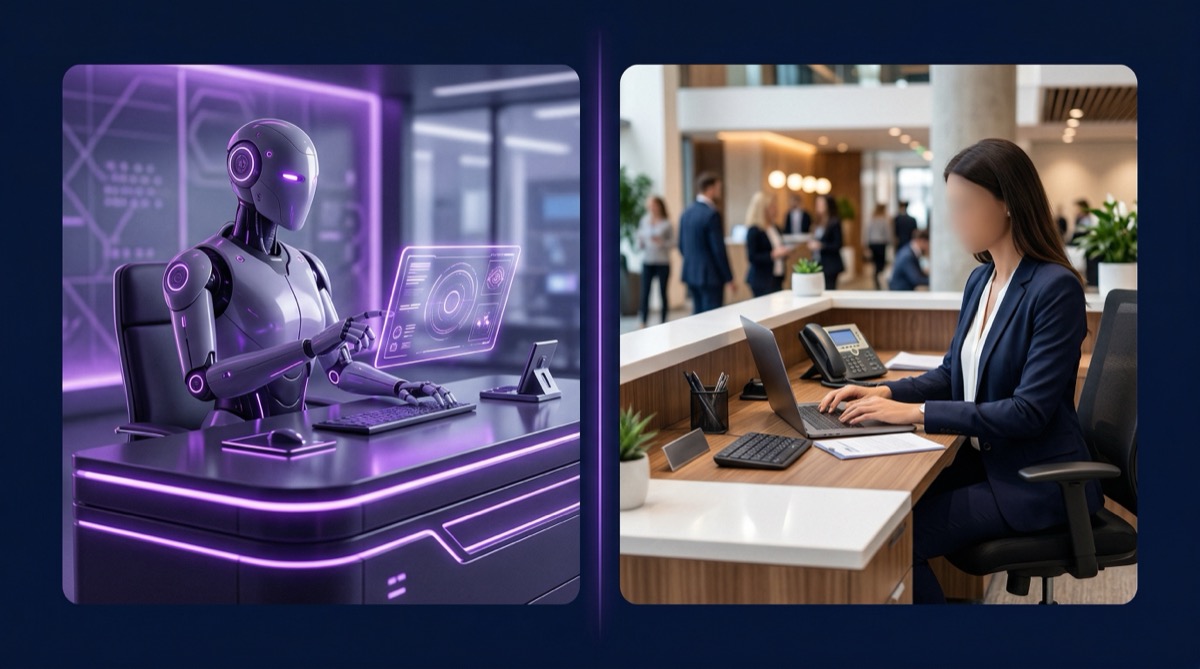
An AI appointment setter is the technology that eliminates that bottleneck entirely. It answers inbound leads within seconds, qualifies them through natural conversation, and books appointments directly onto your calendar. No hold times. No voicemail. No missed opportunities. This guide covers exactly how it works, who benefits most, and the hard numbers behind adoption.
The Core Problem: Leads Die While You Are Busy
The average business takes 42 hours to respond to a new lead. Not 42 minutes. Hours. As our 2026 speed to lead research confirms, companies that respond within an hour are 7x more likely to qualify the lead (Harvard Business Review). The lead doesn't go to the cheapest company or the best reviewed one. It goes to the first one to pick up the phone.
When a homeowner has a burst pipe at 2 AM, they are not comparing Yelp reviews. They are calling the first three plumbers on Google and going with whoever answers. When a business owner fills out a form for CRM software at 10 PM after a long day, the vendor who responds at 10:01 PM has a 391% higher chance of converting than the one who calls back at 9 AM the next morning.
Respond within the hour and you're 7x more likely to qualify the lead. Speed is not a competitive advantage. It is the competitive advantage.
Lead Connect, 2024 Consumer Response StudyThis is the gap that AI appointment setters fill. Not by replacing your sales team, but by making sure no lead ever waits more than 60 seconds for a response, regardless of when they call, what day it is, or how many other calls are coming in simultaneously.
How AI Appointment Setting Actually Works
An AI appointment setter is not a chatbot. It is not a recorded message tree. It is a conversational AI agent that handles the full lifecycle of lead engagement, from initial contact through qualification and booking, using natural language processing in real time.
Step 1: Instant Response
When a lead comes in through any channel (phone call, web form, SMS, live chat), the AI engages within seconds. For phone calls, this means answering on the first ring. For form submissions, it means an outbound call within 60 seconds. The lead never waits.
Step 2: Natural Conversation
The AI conducts a real conversation. It asks qualifying questions specific to your industry: What service do you need? What is the timeline? What is your budget range? Have you worked with a provider before? It handles follow-up questions, objections, and branching logic the same way a trained setter would.
Step 3: Qualification
Based on the conversation, the AI scores the lead against your criteria. Is this a decision maker? Is the budget realistic? Is the timeline actionable? Qualified leads move forward. Unqualified leads get flagged for nurture sequences or politely directed elsewhere.
Step 4: Booking
The AI checks your team's real-time availability across whatever calendar or scheduling system you use (Google Calendar, Calendly, ServiceTitan, Housecall Pro, Salesforce, HubSpot, or any system with an API). It offers available time slots and books the appointment on the spot. The lead and your team both get confirmation immediately.
Who Benefits Most from AI Appointment Setting
AI appointment setting delivers the highest ROI for businesses where missed calls directly equal missed revenue. The pattern is consistent: high-intent inbound leads, time-sensitive service needs, and a booking process that currently depends on someone being available to answer the phone.
Home Services
HVAC, plumbing, electrical, roofing, and general contracting businesses lose thousands per month to voicemail. As we detail in our guide to the cost of missed calls, a single missed emergency plumbing call can represent $3,000 to $15,000 in lost revenue when you factor in the initial repair plus the follow-on work it generates. AI appointment setters answer every call, triage emergencies, and dispatch technicians in real time.
Healthcare and Dental
Dental practices, med spas, chiropractors, and specialty clinics run on appointment density. Empty chair time is lost revenue that cannot be recovered. AI handles scheduling, reschedules cancellations, and fills last-minute openings by reaching out to the waitlist automatically.
Professional Services
Law firms, financial advisors, insurance agents, and consultants generate leads through advertising and referrals. The consultation booking is the critical conversion point. AI ensures every lead gets immediate engagement and a booked meeting, even when the team is in client meetings or after office hours.
Solar and Clean Energy
Solar leads have a notoriously short shelf life. A homeowner who fills out a form for a solar quote at 7 PM expects a response that evening, not a callback the next business day. AI engages immediately, qualifies the property (roof type, ownership status, utility costs), and books the site survey.
See AI Appointment Setting in Action
Watch a live demo of CallSetter AI handling a real inbound lead from first ring to booked appointment. No scripts. No pre-recorded responses. Real AI conversation.
Book a Demo
AI Appointment Setter vs. Answering Service vs. Voicemail
Most businesses default to one of two fallback options when their team cannot answer the phone: a third-party answering service, or voicemail. Here is how all three approaches compare across the metrics that actually matter.
AI Appointment Setter
- Answers in under 60 seconds, 24/7/365
- Qualifies leads during the conversation
- Books appointments in real time
- Handles unlimited simultaneous calls
- Consistent performance, no bad days
- Costs less than one full-time employee
Answering Service
- Takes a message, promises callback
- No qualification or lead scoring
- Cannot book appointments
- Limited agents, long hold times at peak
- Inconsistent quality across operators
- $200-$1,500/month, plus per-call fees
Voicemail
- 88% of callers hang up without leaving one
- No qualification whatsoever
- No booking capability
- One message at a time, no scaling
- Zero engagement or follow-up
- Free (but costs thousands in lost leads)
The Economics of AI Appointment Setting
The math is straightforward, and we break it down fully in our AI appointment setting cost analysis. A full-time appointment setter costs $35,000 to $55,000 per year in salary, plus benefits, training, management overhead, and the cost of turnover (average tenure for SDRs is 14 months). That setter works 8 hours a day, 5 days a week, takes vacation, calls in sick, and has good days and bad days.
An AI appointment setter costs a fraction of that and works 24 hours a day, 7 days a week, 365 days a year. Our breakdown of AI appointment setter ROI shows exactly how the numbers work for businesses of every size. It handles an unlimited number of concurrent conversations. It never has a bad day, never forgets the script, and never loses a lead because it was on another call.
For a home service company receiving 150 inbound leads per month and losing 25% to voicemail or slow response, an AI appointment setter recovering just half of those lost leads at a $400 average ticket adds $7,500 per month in revenue. That is $90,000 per year in recovered revenue from leads the business was already paying to generate.
The most expensive lead is the one you already paid for but never responded to. AI appointment setting recovers revenue that is already in your pipeline.
What to Look for in an AI Appointment Setter
Not all AI appointment setting solutions are created equal. The gap between a basic automated dialer with scripted responses and a genuine conversational AI agent is massive. Here are the features that separate real solutions from marketing claims.
- Sub-60-second response time. If the system takes 5 minutes to engage a new lead, the speed advantage disappears. Real AI appointment setters respond in under a minute, consistently.
- Natural language conversation. The AI should handle follow-up questions, objections, and off-script inquiries without breaking. If it sounds like a phone tree, it is not conversational AI.
- Real-time calendar integration. The AI must book directly into your scheduling system. If it "sends a booking request" that someone has to manually approve, you have an answering service, not an appointment setter.
- Industry-specific qualification. Generic lead qualification misses the nuances that matter. A plumbing AI needs to distinguish a clogged drain from a sewer line collapse. An HVAC AI needs to identify the difference between a maintenance call and a full system replacement.
- CRM and pipeline integration. Every interaction should log automatically to your CRM with full context: what was discussed, qualification score, appointment details, and next steps.
- Analytics and recording. Every conversation should be recorded and transcribed for quality assurance, training, and compliance. You should have visibility into conversion rates, response times, and qualification accuracy.
Common Objections (And the Data That Addresses Them)
"My customers want to talk to a real person."
They want their problem solved quickly. Data from Drift shows that 64% of consumers expect real-time interaction, and 55% prefer talking to a business within 5 minutes of reaching out. When the choice is between waiting on hold for a person or getting immediate help from an AI that can actually book their appointment, the vast majority choose speed.
"AI cannot handle complex conversations."
Modern conversational AI handles multi-turn dialogue, branching logic, interruptions, and context switching. It is not the robotic phone tree of 2020. That said, complex negotiations, sensitive situations, and high-value enterprise deals still benefit from human involvement. AI appointment setting handles the 80% of routine conversations so your team can focus on the 20% that require a human touch.
"What if the AI says something wrong?"
Every AI appointment setter operates within guardrails you define. It cannot make promises outside its script, cannot quote unauthorized prices, and cannot deviate from your approved messaging. Every conversation is recorded and reviewable. The consistency of AI actually reduces the risk of rogue statements compared to a large team of human setters with varying levels of training.
Ready to Stop Losing Leads to Voicemail?
See exactly how CallSetter AI handles your industry's leads. Live demo, no obligation, no pre-recorded scripts.
Book a DemoThe Bottom Line
AI appointment setting is not a future technology. It is a current one. Businesses that adopt it convert more leads, recover lost revenue, and free their teams to focus on closing rather than chasing. The data is unambiguous: faster response times lead to higher conversion rates, and AI is the only way to guarantee sub-60-second response times around the clock.
The question is not whether AI appointment setting works. The research and the results from early adopters have settled that. The question is how much revenue your business is leaving on the table every month by not using it.